
Around the world into a new career : The voyage that shaped an environmental scientist
Professor Rhian Jenkins is the Academic Director: Architecture, Construction, and the Environment, at the University of Wales Trinity Saint David (UWTSD). She has more than 25 years of experience in environmental teaching, research, and leadership. In this personal reflection, she looks back on the life-changing 1996/97 BT Global Challenge Yacht Race, a 37,000-mile circumnavigation that not only tested her resilience and teamwork but also sparked a lifelong passion for environmental science, shaping the academic career that followed.
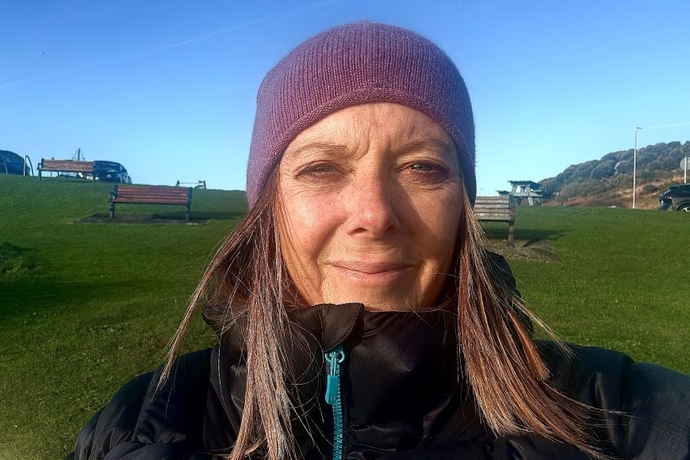
“Thirty years ago I embarked on an adventure which would completely change my life and career trajectory. It was a Round the World Yacht Race that would take us East to West around the globe, against prevailing winds and currents, and would see amateur sailors compete against each other in identical 67ft steel hulled yachts. Fourteen boats, each with a professional skipper, would fight it out to circumnavigate the globe in the fastest time but for most participants, it was simply an opportunity to do something extraordinary.
The journey, some 37,000 miles, would take in some of the most pristine and remote oceans on the planet and would test endurance, skill, teamwork, and mental aptitude. We would all learn tolerance very quickly because being at sea for 40+ days at a time meant nobody was getting off and there was no escaping your crew! Everyone brought a different skill to the table whether that was generator maintenance, comms, or navigator. For me, it was sail making, provisioning the yacht and ocean vigil officer; the latter which would end up being the catalyst for me to change career when I returned.
Racing around the world is all consuming and conditions were tough. It’s hard to explain what being in gale force winds and huge seas for days on end is really like. Nothing dries and seasickness was common. Everyday tasks like cooking or using the heads (toilet) take on a dangerous dimension when the boat is heeled over at 45 degrees and falling off the back of mountainous seas. A curtain had replaced the door on the heads so dignity and personal space were non-existent. There was no room for shyness or embarrassment.
The reality was that we had to hot bunk and sleep deprivation was normal on the rough legs. If there was a sail change required in the middle of the night it was often safer to have more crew on deck and if an “All hands” shout went out, everyone got up. Food took on a new relevance. Simply getting enough calories into us was a very real challenge because every task required energy, even just moving around below deck. Although the food was mainly rehydrated and made more palatable only by adding herbs and spices, we were able to make fresh bread every morning. The highlight of the day …. and nothing beats waking up to that smell!
The journey would see the fleet battle gale force winds for weeks on end, suffer serious structural failures, like the loss of a mast or collision with something solid (a shark or a large piece of marine debris). Fortunately, none of these incidents, including our own encounter with a growler (small iceberg) were catastrophic but they could so easily have been. We had to be self-sufficient because our route would take us way beyond the realms of rescue.
But it certainly wasn’t all dangerous or tough. There were plenty of what Chay Blyth (former paratrooper, yachtsman, and adventurer) would call ‘those 10% moments’. The sunsets/sunrises, wildlife encounters, and the most incredible night skies without light pollution to spoil it. Those were special and extraordinary moments. But it did become apparent that there was a paucity of wildlife. When you sail 37,000 miles you expect frequent encounters and that wasn’t our reality. Of course, we saw dolphins and occasionally whales and the South Atlantic and Southern Oceans did have reasonable bird populations. Yet what we encountered most was plenty of visible pollution, fishing vessels, and shipping containers.
My role of Ocean Vigil Officer had involved noting occurrences of wildlife, sea temperature, and other more general observations. I had no idea then, but what we were actually experiencing was one of the most powerful El Nino events ever recorded (1997-1998). We were witnessing environmental change on a massive scale and the impact of man-made pollution was visible in even the most remote, pristine oceans. Fast forward 30 years and the situation is now even worse. Marine ecosystems are struggling against the impact of climate change, pollutants, and overfishing. Polar regions are melting, sea levels are rising across the world and we are currently being warned about an impending El Nino likely to rival that of 1997 and 2015.
Apart from teaching me a lot about my own resilience and tenacity, the Challenge yacht race opened my eyes to the environmental harm we are all doing. It was a catalyst for me to change career direction; retrain and create an environmental pathway I had never initially planned. From Research Assistant to Head of School in just 10 years it was a rapid progression, but one that started out on that yacht race. For the last twenty-five years I have been attempting to pay that forward and encourage more people to engage with an area of science that is often dismissed as irrelevant.
During those 10 months at sea, you leave behind all the trappings of modern day life and see the natural world in a way that few get to experience. It’s very raw, it’s violent, it’s beautiful but it’s also overwhelmingly exposing. We had time to observe our surroundings and little did I know that the data collected as Ocean Vigil Officer would eventually be a useful way of assessing climate change. Phenology (the study of recurring biological events) can start by simply recording the first day each year you see a swallow or budburst in a given location. A longitudinal study that collects even the simplest of data can create regional climate trends if consistency is applied.
I didn’t know it at the time but the basic data I collected would contribute to a repository of spatial geographical distribution for key indicator species. That marine ecology focus would lead to opportunities researching Harbour Porpoise Phocoeana phococena in Swansea Bay and Gower, as well as project work for the Low Carbon Renewables Initiative and Swansea Bay Tidal Lagoon, where environmental impact assessments were carried out. The beauty of doing practical research while teaching allows for active student engagement in the projects and a much wider appreciation of monitoring visible environmental impacts. Although the starting point would be marine-based, acquired carbon sequestration and habitat management experience has led to a much broader teaching career in ‘built and natural’ environments and I still have the enthusiasm for further curriculum developments and cross-disciplinary fieldwork with students across this University.
Not everyone has the opportunity to go on a yacht race, but the health of, or even absence of, those marine mammals, told us a lot about their food chain and surrounding environment. It created a passion for environmental monitoring that is probably more important now than it was back in in 1997. We have never needed younger (and older) individuals to consider environmental career pathways more than we do now. Industry is changing its priorities and whether it is conservation, manufacturing, fashion, construction or even business, there are environmental roles that can really make a difference. It started out as a wild adventure for me but has ended up being an academic journey which is still continuing.”
About the Author: Professor Rhian Jenkins
Professor Rhian Jenkins has over twenty five years of academic and professional experience in the environmental field. She was the first female Head of School in what was then the Faculty of Architecture, Computing and Engineering at UWTSD. An environmental conservation degree led to a PhD in marine mammal science and the commencement of a career in teaching and research. While having a predominantly environmental focus, Rhian’s work in land remediation and habitat management, sustainable development and environmental planning pulled together what was then a disparate and disconnected curriculum. Bringing that synergy between the Built and the Natural environments is a key component of her current role.
Rhian took part in the BT Global Challenge Yacht Race in 1996/7. In spite of being airlifted to the Falklands she was able to re-join and complete the race.

Further Information
Rebecca Davies
Executive Press and Media Relations Officer
Corporate Communications and PR
Email: rebecca.davies@uwtsd.ac.uk
Phone: 07384 467071