
Celebrating Dr Sneha Roy’s academic journey
When Dr Sneha Roy began her Professional Doctorate in Interfaith Studies at the University of Wales Trinity Saint David, she was driven by a deep intellectual curiosity and a commitment to understanding the less visible forms of inequality and violence that shape people’s lives.
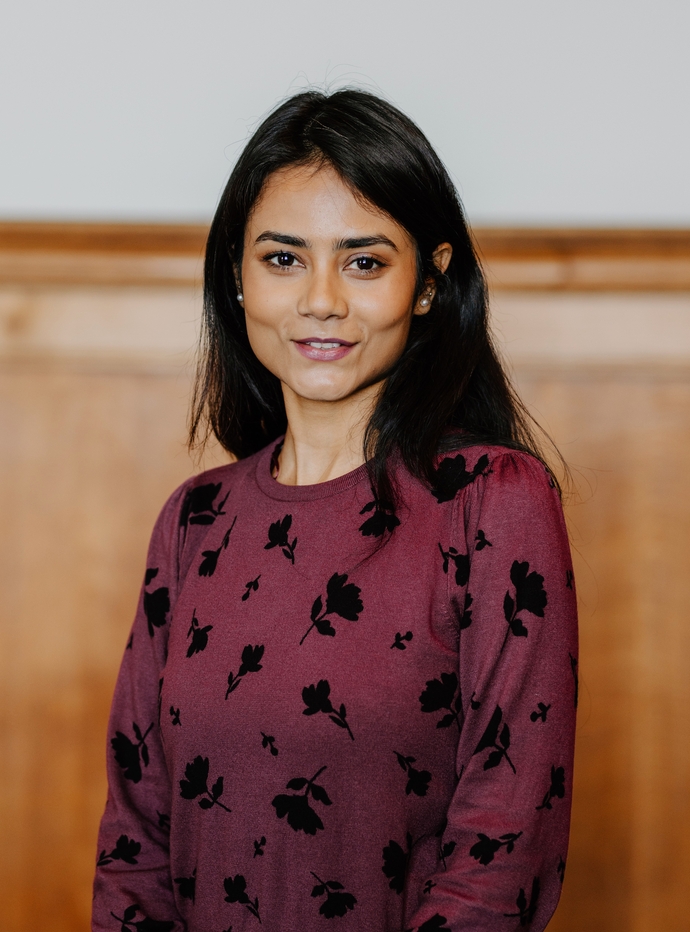
This month, she has taken up a position as Lecturer in Religion at York St John University, marking an exciting new chapter in a career built on critical enquiry, resilience and community.
An anthropologist and Religious Studies scholar, Dr Roy’s research explores non-visible modalities of violence and the ways agency operates under conditions of constraint and inequality. It is a field that demands nuance, empathy and analytical precision - qualities she began to hone during her time at UWTSD.
“The programme stood out for its distinctive curriculum and structure,” she explains. “It promised the kind of academic challenge I was looking for and felt like the right fit for me.”
Developing confidence and clarity
The structured coursework in her first year laid strong foundations. “It strengthened my critical thinking, research and analytical skills,” she says. “It prepared me to engage confidently with complex material and communicate ideas clearly.”
Those skills proved essential as she undertook intensive fieldwork for her doctoral research. As the programme progressed, she developed the confidence to work independently while also valuing collaboration. “I was able to work independently and collaboratively,” she reflects.
Alongside her research, Dr Roy taught for two semesters, an experience that would shape her professional future. “It enabled me to develop my teaching skills,” she says. Now, standing at the front of her own lecture theatre at York St John University, those early experiences continue to inform her practice.
Some lessons were practical but powerful. Asked which skills she uses every day, she answers without hesitation: “Time management.” Balancing research, teaching and wider responsibilities requires discipline - something she began refining during her doctorate.
Community and mentorship
It was not only the academic structure of the programme that made a difference, but also the environment in which she studied. Dr Roy found herself part of a close-knit and supportive scholarly community.
“My primary supervisor, Professor Bettina Schmidt, was central to my time at UWTSD,” she says. “Her support and guidance throughout helped me shape my research and overall professionalism.”
Professor Schmidt has watched Dr Roy’s development with pride. “Sneha demonstrated exceptional intellectual curiosity and determination throughout her doctorate,” she says. “Over the course of the programme, she grew into a confident and independent scholar, capable of handling complex material with nuance and originality. It has been a pleasure to see her develop both academically and professionally, and I am delighted to see her take up this lectureship. I look forward to following her continued achievements in the years ahead.”
Beyond supervision, it was the camaraderie among her Professional Doctorate cohort that left a lasting impression. “The cohort was friendly, diverse and helpful. We had a real sense of community,” she recalls. Living on campus allowed connections to grow beyond formal academic settings, creating friendships as well as professional networks.
That sense of belonging became especially meaningful during the Covid-19 pandemic. “During the pandemic, this small community was particularly helpful in ensuring support and wellbeing during difficult times,” she says. “It made a real difference.”
Looking back, it is “the mentors and the campus” that stand out most vividly. “I am so grateful for the time I spent there and with people who are still my greatest mentors. It holds a firm place in my heart and was undoubtedly a significant phase for both my professional and personal progression.”
A career taking shape
After completing her doctorate in 2021, Dr Roy’s journey took her to Vienna, where she worked at an intergovernmental organisation following her PhD viva. The role broadened her perspective, allowing her to engage with policy and practice beyond academia.
She later returned to academic life after being awarded a prestigious British Academy Postdoctoral Fellowship at the University of Edinburgh’s School of Divinity. The fellowship affirmed the strength and relevance of her research, paving the way for her appointment in January 2026 as Lecturer in Religion at York St John University.
Reflecting on her development since beginning her doctorate, Dr Roy notes significant intellectual and personal growth. “I have become more intellectually independent and confident in my thinking,” she says. “I have learned to question assumptions, engage critically with complex ideas, and articulate my arguments with clarity and nuance.”
She also highlights increased resilience and self-discipline. “I have developed the ability to manage competing responsibilities while maintaining focus on my goals.”
Among her proudest achievements is her ability to balance multiple commitments. “Throughout my professional journey, I have been able to balance research, teaching, community work and policy advocacy. It has been hard but equally rewarding.”
For current students considering their own futures, her advice is heartfelt and straightforward: “Be curious and follow your passions.”
Dr Sneha Roy’s journey from doctoral researcher to Lecturer in Religion reflects not only personal determination, but also the formative influence of a supportive academic environment. As she begins this new chapter at York St John University, she carries forward the skills, confidence and sense of purpose cultivated during her time at UWTSD and a deep appreciation for the mentors and community who helped shape her path.
Further Information
Arwel Lloyd
Principal PR and Communications Officer
Corporate Communications and PR
Email: arwel.lloyd@uwtsd.ac.uk
Phone: 07384 467076