
It is rocket science: professionalising the early childhood workforce in the UK
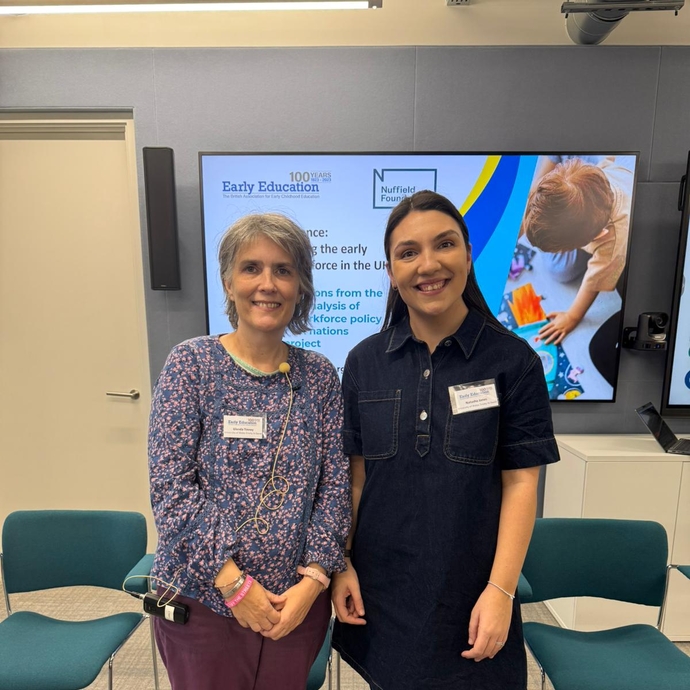
UWTSD lecturers, Natasha Morgans and Dr Glenda Tinney, share their experience as part of the Early Education comparative study of early years workforce policies across the four UK nations.
Among its recommendations, the study urges reform of the fragmented qualifications landscape across the four nations to create clear, high-quality career pathways with defined progression routes, linked to related sectors such as primary teaching and aligned to national pay scales.
One of the great parts of our roles as Early Years Education and Care lecturers is to be able to work with early years professionals, some starting their careers and many of our evening flexible learners with longstanding experience in the sector. We understand the important roles they have in supporting the well-being and education of our youngest learners in the early years sector, as well as the high levels of knowledge and skills required to undertake their roles.
Research highlights the significance of the first few years of a child’s life in terms of brain development, holistic development and long-term outcomes, and that the professionals working with young children are essential in providing the environments, interactions and support needed for children to make the most of these early years
Such professionals are highly skilled, trained and have the understanding and enthusiasm to ensure that children have a flying start, reflecting the Welsh Government’s own aims within policy and programmes such as Flying Start, Curriculum for Funded Non Maintained Settings and the Early Childhood Plan, Learning and Care Plan.
However, despite the significance of the early years professionals and positive policy context, there are still barriers in the sector facing recruitment and retention challenges, concerns about the value given to this key area and complexity in terms of the early years policy and curriculum in different education and care sectors.
We have recently been co-researchers as part of the Early Education, Nuffield Foundation funded research project, which was a comparative study of early years workforce policies across the four UK nations. On 28 November we were part of the launch of the “It is rocket science: professionalising the early childhood workforce in the UK” report, which calls for stronger action across all four UK nations to strengthen qualification requirements for the early years workforce (EYW) and to establish clear career progression routes with appropriate pay and status, in order to address the current recruitment and retention crisis and drive up quality in the sector. The recommendations highlighting the urgent need to improve the status and recognition of early childhood education professionals.
Drawing together a review of the literature alongside interviews and focus groups with national stakeholders and interviews with international experts in early years education and childcare, the report includes insights from over 80 experts. The evidence highlights sustained challenges in recruitment, retention, remuneration, professional recognition, qualifications, and status for those working with young children and, for us in Wales, a need to make sure positive policy contexts are fully implemented.
Being part of the project and leading the Welsh section of the research was a very positive experience. We were able to work with researchers from England, Northern Ireland and Scotland and learn from each other about similar opportunities and challenges facing the early years workforce in the different nations and to learn from each other regarding policies and initiatives that have worked and supported the sector. There were also international insights from interviews with early years experts in different countries to share good practice in terms of policy and how it can be implemented effectively.
In all four nations, a largely fragmented approach to workforce development, with a lack of a clear Early Years Workforce (EYW) strategy, has created a crisis that is not only felt daily by those working in early years education and care, but is also at risk of undermining the quality of early years services at the heart of providing children’s foundations to learning, development, and life. However, the research also provides opportunities to explore initiatives from the different nations, that may be able to help for example in Wales, the Early Years Workforce Plan and Social Care Wales We Care initiative and qualifications framework.
The research allowed us to share voices from Wales, and one real positive was the opportunity within a UK-wide research projects to ensure that all of the research in Wales was delivered bilingually. The research executive summary has also been published in Welsh and insights regarding supporting bilingual provision are valuable across the nations in terms of wider multilingual practice.
We learnt so much from working with key researchers from other nations and Early Education and the Nuffield Foundation.
Early Education’s Chief Executive, Beatrice Merrick, said:
“We know that policymakers in all four nations are looking at how best to address current recruitment and retention challenges and to raise the quality of early childhood education provision to maximise the effectiveness of investing in this phase. This is complex and demanding work which requires an accumulation of knowledge and experience to be done well, and pay and conditions must reflect that in order to attract and keep best people, and to give every child the start in life they need and deserve.”
Programme Head for Education at the Nuffield Foundation, Eleanor Ireland said:
“The challenges facing the early years workforce are well known, and similar issues are evident across the four UK nations. This important new study sets out not only what needs to be done to tackle these entrenched problems, but recognises that a phased approach is needed to improve the quality of early years provision and secure better working conditions for educators over the longer-term.”
The report called for minimum entrance qualifications to match the high demands and expertise required in early years education and a strengthening of entry requirements. In addition, the recommendations highlight the need for the current fragmented and confusing array of qualifications in all four nations to be addressed to create clearer, high-quality pathways through a career in early childhood education, with well-defined progression routes, aligned to related sectors, including teaching in primary settings. It also proposes linking these to national pay scales. Taken together with professional registration, the report identifies these measures as essential to improving the status and recognition of early childhood education professionals, tackling the current recruitment and retention crisis, and driving up quality across the sector.
Examples from Wales could be used to illustrate some positive policy context in this area such as the Social Care Wales list of recognised qualifications to work in the early years sector and programmes through organisations such as Mudiad Meithrin to support bilingual and Welsh medium provision. There was also discussion of the Welsh Government’s Early Childhood Play, Learning and Care plan which interviewees suggested was a positive contribution to highlighting the importance of the sector.
We are looking forward in early 2026 to launch the outcomes of this research with a focus on the conclusions in the Welsh context.
It is rocket science: professionalising the early childhood workforce in the UK - Summary and Recommendations and Final Report from the Comparative analysis of early years workforce policy in the four UK nations (EYW4N) project can be downloaded from www.early-education.org.uk/early-years-workforce-policy-in-the-four-uk-nations-a-comparative-analysis/
Contact Glenda Tinney: g.tinney@uwtsd.ac.uk to discuss the research from Wales further or to find out more about our early years courses.
Contact for further enquiries
For further information please contact Beatrice Merrick, Chief Executive, Early Education beatrice@early-education.org.uk).
NOTES TO EDITORS:
1. The Nuffield Foundation is an independent charitable trust with a mission to advance social well-being. It funds and undertakes rigorous research, encourages innovation and supports the use of sound evidence to inform social and economic policy, and improve people’s lives. The Nuffield Foundation is the founder and co-funder of the Nuffield Council on Bioethics, the Ada Lovelace Institute and the Nuffield Family Justice Observatory. This project has been funded by the Nuffield Foundation, but the views expressed are those of the authors and not necessarily the Foundation. Find out more at: nuffieldfoundation.org Bluesky: @nuffieldfoundation.org LinkedIn: Nuffield Foundation
2. Early Education (The British Association for Early Childhood Education) is the leading independent national charity for early years practitioners and parents, campaigning for the right of all children to education of the highest quality. Founded in 1923, it has members in England, Northern Ireland, Scotland and Wales and provides a national voice on matters that relate to effective early childhood education and care of young children from birth to eight. The organisation supports the professional development of practitioners through publications, training, conferences, seminars and access to a national and regional branch network. For more information on the work of Early Education visit www.early-education.org.uk
Further Information
Lowri Thomas
Principal Communications and PR Officer
Corporate Communications and PR
Email: lowri.thomas@uwtsd.ac.uk
Phone: 07449 998476