
Sustainability
Fix your Future
UWTSD is dedicated to creating a community of staff and students who support sustainability through social, economic, cultural and environmental responsibility.
We work collectively across all University areas to collaborate and educate individuals about the ways we can positively influence today’s society and generations to come.

Environmental Sustainability Strategy 2025-2030
Having declared a climate emergency in 2019 we haven’t stopped there. The Environmental Sustainability Strategy 2025–2030sets out the University of Wales Trinity Saint David’s strategic approach to addressing the climate and ecological challenges facing our campuses and communities. Building on our commitment following the declaration of a climate emergency, the strategy provides a clear framework to guide the University’s transition towards a more sustainable and resilient future.
The strategy focuses on a number of strategic priorities including:
- Carbon Reduction,
- Education and Employability
- Sustainable Estate
- Research and Innovation
- Leadership, Engagement and Culture
- Monitoring and Reporting
Through these priorities the University will continue to reduce its environmental impact while creating opportunities for staff and students to engage with sustainability through learning, research, and practical action.
By working collaboratively across our campuses and with external partners, the strategy supports UWTSD’s ambition to play a leading role in delivering positive environmental change across Wales and beyond.
Read the full Environmental Sustainability Strategy 2025–2030 to learn more about our priorities, actions, and targets.
If you would like to explore UWTSD’s sustainability plans and strategies in full, please visit Strategies and Policies below.
-
What we’ve done
-
Reusable cups – YOU are making the difference
-
Charging Points for Electric Vehicles
-
Swansea Community Cupboard
-
Wellbeing Walks
-
Solar Energy
- Invested over £1M into Solar PV projects so we can generate our own energy.
- Planted 200 trees to celebrate 200 years of UWTSD.
- Banned single use plastic from our food outlets and we are phasing out disposable coffee cups.
- Achieved Green Flag status for Carmarthen and Lampeter Campus for maintaining beautiful grounds and ecosystems for everyone to enjoy.
- Reduced our waste and increased our recycling rates.
- New buildings are built to a Net Zero BREEAM Excellent standard.
- We have cultivated wildflower meadows where nature is flourishing.
- We have a ‘Preloved Pantry’ on campus for those bits and bobs you forget.
- Universities in Wales have published a joint statement on the use of non-disclosure agreements (NDAs) in cases of sexual harassment or abuse. Further detail can be found here: Welsh universities publish statement on use of NDAs | UniversitiesWales

On average UWTSD uses 135,000 disposable cups a year which generates 1,599kg of waste and 34 tonnes of CO2 emitted into the atmosphere as a direct result of this waste stream.
This is the equivalent of 170 double-decker buses filled to the brim with carbon dioxide. In our efforts to reduce our carbon emissions we are looking at ways to use fewer disposable cups across our outlets, such as incentivising the use of reusable travel cups. A massive thank you to the 10% of customers who have remembered to bring their own cups.
Launching at the start of the 26/27 academic year UWTSD will be offering a reusable cup scheme at all our outlets. Simply add the £2 cup deposit when you purchase your coffee. Enjoy your guilt-free coffee. Then return the cup to any outlet for the deposit back, swap it for a fresh cup, or keep hold of it to return later. More information is available at our wonderful catering outlets.
We can only achieve our aim of reducing the amount of disposable coffee cups thrown away each year with your help.


Travel is a key policy area, both nationally and locally, that significantly impacts upon climate change. It is also a great example of how UWTSD have looked holistically at how we decrease our carbon emissions, while supporting colleagues to take their own meaningful action on reducing theirs.
In 2022, UWTSD launched the Electric Vehicle (ultra-low emissions vehicle) Salary Sacrifice Lease scheme. This is operated by an expert in this field Knowles Fleet. Salary sacrifice is an arrangement under which you agree to give up (sacrifice) some of your gross salary (your salary before income tax and National Insurance Contributions (NIC) have been deducted) in exchange for a non-cash benefit, such as a car, provided by your employer. This means that you do not have to pay tax, or national insurance contributions on the amount that you give up. By signing up to this scheme, you agree to sacrifice an amount of your gross salary, on a monthly basis, in return for a brand new ULEV car. We have seen a really positive uptake on this scheme.
Electric Vehicle charging points have been installed across the majority of our estate. If you register on the Podpoint app with your UWTSD staff or student email address, the electric is charged at a preferential rate, significantly cheaper than the public rate and most commercial charging points.
In addition to these schemes much of the University fleet is now electric which is seeing the current charging points being well used. To increase capacity to ensure that our university vehicles can be charged, UWTSD have successfully applied for a Welsh Government Electric Vehicle Charging Infrastructure grant that will see the additional charging points being installed in Cardiff Registry, Swansea IQ and SBC, Carmarthen Campus, and Lampeter Campus.
A cupboard brimming with household things that you need, FREE to a good home, open to EVERYONE. The Community Cupboard has been collecting items that maybe useful to you, such as bedding, crockery, curtains, cutlery, electricals pots and pans, anything that can be put to good use. If you need something you can come to the Community Cupboard and see if we have it and you can take it home for FREE.
Donations
The Community Cupboard is based in the:
Dylan Thomas Centre, 6 Somerset Pl, Swansea. SA1 1RR
Open weekly.
Please contact communitycupboard@uwtsd.ac.uk

The Sustainability team have established Wellbeing walks around our campuses in Carmarthen, Lampeter and Swansea.
We encourage staff and students to use the wellbeing walks as a chance to step away from lectures, coursework, and screens, to enjoy fresh air and green spaces, get moving at their own pace, and take time to reset.
Spending time outdoors can help reduce stress and anxiety, improve concentration, lift mood, and support both mental and physical wellbeing especially during busy or high‑pressure points in the academic year.

Since 2023 UWTSD has installed 2,579 solar panels on our rooftops. You may not see them, but they are working away to generate approximately 12% of our energy consumption each year.
In 2025 our rooftop solar generation was double what we generated in 2024 and triple what we started with in 2023. We continue to survey and look for ways to generate our own electricity.
As for the power we cannot generate ourselves, we import only UK Renewable energy.

What you can do
- Shop local.
- Make environmentally informed travel choices.
- Reuse or recycle.
- Say NO to disposable coffee cups.
- Refuse single use plastics.
- Eat less meat.
- Power down – turn off lights, laptops, phones, etc…
- Don’t use aerosols.
- Use less water
- Join our five-minute shower campaign [LINK TO PDF]
- Sustainability Engagement Plan


Green Travel
Our campuses are easy to reach via foot, bike and public transport. Follow the links below for information on how to get there using sustainable modes of transport.
Healthy Travel Charters
The University demonstrates its commitment to long-term goals of becoming a net-zero carbon organisation with the signing of the ‘Swansea Bay Healthy Travel Charter’ and the Mid and West Wales Healthy Travel Charter. The charters’ ambitious actions promote sustainable transport methods and empower staff and students to make green travel choices.

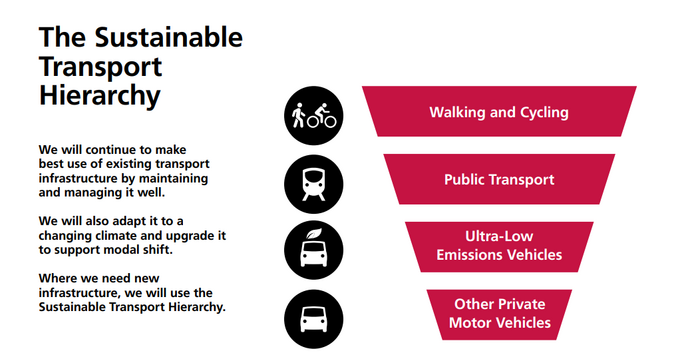
Staff and students are encouraged to follow this detailed hierarchy when deciding on whether to attend a meeting or conference off site:
- Is this meeting necessary?
- Can all meetings that are face to face be scheduled on the same day?
- If travelling for only 1 meeting, would a teams call be the more environmentally sensible option?
- Can I walk, cycle or take the bus for local meetings?
- Can I take the train?
- Is it possible to car share?”
Each year we undertake a survey of our staff and students to understand their travel habits and identify ways we can promote healthy, low carbon travel.
Waste and Recycling
UWTSD is committed to reducing waste and promoting a circular economy across our campuses. Through improved recycling facilities, waste segregation, and staff and student engagement, the University continues to make strong progress in reducing its environmental impact.
Our efforts have been recognised nationally. In the 2025/26 People and Planet University League, UWTSD ranked in the top 10 universities in the UK for waste and recycling, and 1st in Wales in this category.
Our Waste Management Plan 2025–2030 sets out how we will continue to improve waste reduction, recycling, and resource efficiency across the University.
You can help support these efforts by using the correct bins when on campus and separating waste for recycling wherever possible.
Find out more in the Waste Management Plan 2025–2030

The Green Dragon Environmental Standard is awarded to organisations that can demonstrate effective environmental management and that are taking action to understand, monitor and control their impacts on the environment.
It’s suitable for organisations of all sizes, in any industry, and is flexible in design, so you tailor it to your needs.
The Standard, which is structured into five ‘Levels’, allows organisations to gain a third-party certification that provides recognition of their environmental practices and demonstrates their commitments to sustainability, consideration of environmental impacts, compliance with legislation and environmental protection.
The 5 Levels of Green Dragon are:
- Level 1: Commitment to Environmental Management
- Level 2: Understanding Environmental Responsibilities
- Level 3: Managing Environmental Impacts
- Level 4: Environmental Management Programme
- Level 5: Continual Environmental Improvement.
Level 5 Green Dragon is equivalent to, and in fact requires a greater environmental commitment in respect to public reporting and carbon emissions than ISO14001 and EMAS. The Green Dragon Environmental Standard is owned and managed by Groundwork Wales, a UKAS Accredited Inspection Body.
UWTSD are Committed to Sustainable Development
The Sustainability Steering Group (SSG) is responsible for supporting the Sustainability agenda for the University Group, and for monitoring and measuring progress against performance indicators to confirm effective implementation and alignment with organisational objectives and strategy. It will review (where appropriate) strategy and policy and approve or refer to Senior Directorate as is necessary, while working to ensure that the requirements of both UN Sustainable Development Goals and the Wellbeing of Future Generations Act (2015) requirements are met. This steering group is chaired by the Chief Operating Officer who is instrumental in driving the institutional change.
The membership of these groups ensures senior level oversight and support for this agenda, as well as ensuring engagement and consultation with senior officers in terms of wider University Group impact.
Enabling meaningful change
Across the academic and professional services, staff members have taken on roles as champions. The Sustainability Champions and Waste Champions will be pivotal to enabling the shift in organisational culture that is required to truly embed sustainability
Across the student body, sustainability student champions are nudging their peers along the sustainability journey. The roles range from supporting litter-picks to sorting donations or running awareness campaigns. Students also have an opportunity to be co-opted onto sustainability action groups, themed groups that develop strategy and action plans in specific areas such as food or biodiversity.
Sustainability Steering Group Membership
- Chief Operating Officer – Peter Mannion
- Head of Sustainability and Environment – Dan Priddy
- Institute Deans
- Chief People Officer
- Chief Financial Officer
- Director of Digital Services
- Director of Estates
- Executive Head of Student Services
- Director of Academic Services
- Head of Planning
- Students Union CEO
- Representative from Coleg Sir Gar
- Other colleagues as required
At UWTSD we re committed to delivering courses that help equip students for the future and focus on Environmental Sustainability. We aim to help develop your knowledge, understanding and skills to best equip you for your tie after university.
We run several sustainability specific courses such as:
- Sustainable Construction (MSc)
- Sustainability Leadership (MBA)
- Environment, Sustainability and Climate Change (BSc)
- Energy and Environmental Engineering (BEng)
But we don’t stop there! Education for Sustainable Development is the business of all our subjects. Our courses are being mapped to the UN Sustainable Development Goals and our Sustainability Team support guest lectures across the curriculum looking at how environmental sustainability is relevant to your area of study.

For general enquiries around sustainability please email sustainability@uwtsd.ac.uk with further information available from the Sustainability Contacts below.
Sustainability |
Email Address |
|---|---|
| Sustainability | sustainability@uwtsd.ac.uk |
| Waste and Recycling | waste@uwtsd.ac.uk |
| Energy & Renewables | utilities@uwtsd.ac.uk |
| Sustainable Estate | operations@uwtsd.ac.uk |
Name |
Job Role |
Area of Sustainability |
Contact |
| Peter Mannion | Chief Operating Officer | Chair of Sustainability Steering Group | sustainability@uwtsd.ac.uk |
| Dan Priddy | Head of Sustainability and Environment | University Wide Sustainability Leadership | d.priddy@uwtsd.ac.uk |
| Koi Merebark | Sustainability Manager | University Wide Sustainability Implementation | k.merebark@uwtsd.ac.uk |
| Bethan Evans-Phillips | Administrator | Waste and Circular Economy | waste@uwtsd.ac.uk |
| Kyle Erickson | Associate Pro Vice Chancellor (Academic Enhancement) | Education for Sustainable Development | quality@uwtsd.ac.uk |
| Emyr Jones | Interim Director of Estates | Sustainability within the built environment | operations@uwtsd.ac.uk |
| Craig Jones | Head of Health and Safety | Internal Environmental Auditing | sustainability@uwtsd.ac.uk |
| Gavin Harding | Compliance Manager | Oversight of Building Management Systems (BMS) | compliance@uwtsd.ac.uk |
| Kevin Hodson | Senior Catering and Conference Manager | Sustainable Food and sustainable food plan | catering@uwtsd.ac.uk |
| Emily Spencer | Deputy Procurement Manager | Sustainable procurement | procurement@uwtsd.ac.uk |
| Rebecca Doswell | Head of Planning | Responsible for Climate Emergency Response and Climate Adaptation Planning | sustainability@uwtsd.ac.uk |
| Steve Ralph | Chief Executive Officer – UWTSD Students Union | Sustainability at the Students Union and Student Engagement | su.comms@uwtsd.ac.uk |
| Catrin Evans | Interim Head of Capital Projects and Hard FM | Responsible for the Sustainable Construction and Refurbishment Plan implementation | operations@uwtsd.ac.uk |
| Neal Summerfield | Grounds and Landscaping Manager | Oversight of university wide bio-diversity management | sustainability@uwtsd.ac.u k |
| Chloe Davies | Residential Life Manager | Sustainability in Halls of Residence | accommodation@uwtsd.a c.uk |
| Nishan Clarke | Head of Careers | Ethical Careers | careers@uwtsd.ac.uk |
| Sarah Evans | Chief Financial Officer | Ethical Investment | sustainability@uwtsd.ac.uk |
| Pamela Styles | Senior Academic Development Officer | Chair of Ethical and Sustainable use of AI Working Group | sustainability@uwtsd.ac.uk |
| Alison Harding | Executive Head of Library and Learning Resources | Chair of the Green Libraries Group | sustainability@uwtsd.ac.uk |

The University holds a fleet of business and trade vehicles, 80% of which are electric, including pool cars that are available to staff for travel between campuses to minimise emissions and lower the Universities carbon footprint.”
Sustainability News
Sustainability is at the heart of UWTSD; as such our staff and students work hard to have a positive impact on our people, our communities and our planet. Take some time to have a look at a few of our stories below.
Resources
Free learning unit: “Climate Change and Net Zero in Wales”
In just 30 minutes you’ll gain clear insights into:
- The human causes of climate change.
- What emissions are and where they come from.
- The impacts of climate change on us all.
- The Welsh Government’s ambitious targets to achieve Net Zero.


