
Photography

WHY CAN’T I TOUCH IT
Photography has always promised proximity, to people, to places, to moments that have already slipped away. Yet, this nearness is a fiction; the photograph shows us its referent, but only ever as an illusion. What we see is never the thing itself, but a trace, an afterimage suspended between presence and absence.
In a time shaped by digital culture, we exist within an ongoing present, a stream of images and interactions that seem immediate, yet remain perpetually out of reach. This tension between touch and distance, connection and disembodiment, defines much of the contemporary photographic condition. The graduating artists of Why Can’t I Touch It inhabit this uncertain space between the visible and the felt. Their work reimagines photography not as a mirror to reality, but as a site of tension, where material and immaterial, body and image, presence and absence intersect and unravel. Their practices explore this delicate interplay between reality and representation. Through varied approaches, from lens-based practice to installation, moving image, and analogue and digital experimentation, these artists question what it means to see, to feel, and to know in an age where presence is mediated, and the tangible continually dissolves into the virtual.
The staff of the Photography Department at Swansea College of Art, UWTSD, would like to extend their gratitude to the class of 2026 for their dedication, curiosity, and collaboration in shaping this exhibition. We congratulate them on the ambition of their work and the depth of their inquiry, and we look forward to seeing how their practices continue to evolve beyond these walls.
Our Work
The Gaze Reframed
Abbie Ashman’s photographic practice explores the nuances of womanhood within visual culture. Her current body of work presents portraits that celebrate feminine presence while quietly alluding to histories of objectification and discrimination. Working through portraiture, she focuses on presence and gaze, drawing attention to how women are framed, consumed and interpreted. The work holds space for both strength and vulnerability, inviting reflection on visibility, power, and the act of looking.
- Instagram: @photo_graphybyabbie

Destructive Silence
Destructive Silence examines the lived experience of mental health, with a particular focus on eating disorders. The work draws upon the artist’s long-term physical and psychological encounters, using photography as a means of processing and articulating recovery. The series constructs a visual narrative that moves between documentation and reflection, foregrounding both vulnerability and resilience. Through the inclusion of everyday objects—such as food and clothing—the work situates recovery within the routines and materials that shape it, revealing how these seemingly mundane elements carry emotional and psychological weight. Alongside this, self-representational imagery introduces a more visceral register, using the body to communicate states of overwhelm and internal conflict. Together, these elements aim to raise awareness of eating disorders while emphasising the possibility of recovery, not as a fixed endpoint, but as an ongoing and deeply personal process.
- Instagram: @c.i.m.b_galleries
- Website: Carys Banfield

Bristowe-Davies is not so concerned with literal depiction, she looks to evoke feeling, where the viewer experiences discomfort and doubt . She works within the in-between, trying to capture dreamlike, surreal and uncanny moments that trace the way memory and the earth are intertwined. Decay embodies this. Malformed trees stand while suffocated by parasitic plants, mould and rot taking over a form, mutating it into another. A carcass, or it’s ghost, confronts existential dread. I am not dead, but I will be.
- Instagram: @carysbd
- Website: Carys Bristowe-Davies

Castell Cook
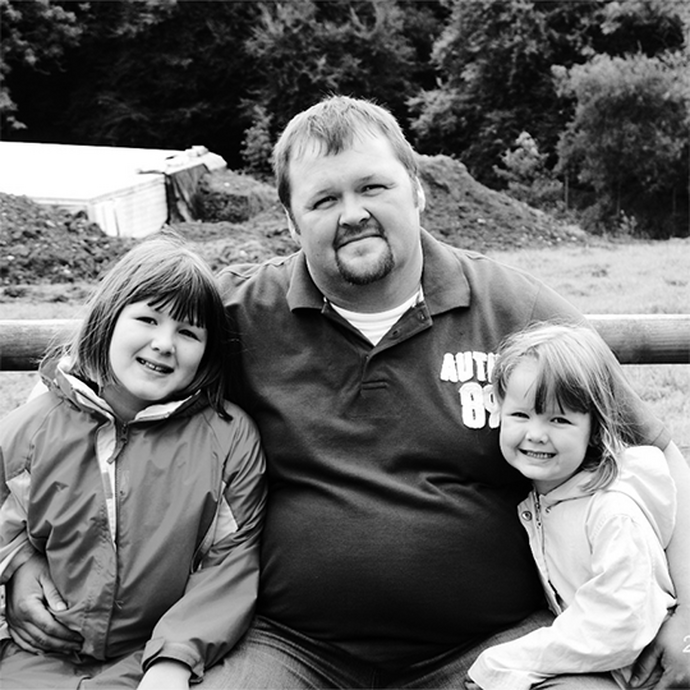
Teleri Cook’s work gathers fragments of her father’s life through the eyes of those who loved him. Presented as postcards in a stand reminiscent of those found at retreats and tourist sites, the images transform memory into something intimate yet collective. At the top of each column, an archival image of her father anchors the memories below. Together, they form a shared archive of grief, where personal loss becomes communal remembrance and identity is reshaped through connection.
- Website: Teleri Cook Photography
ACTS: Il
Cole creates bold, vivid imagery that explores psychological phenomena such as pareidolia. Using oil, water, and refracted light, he transforms microscopic interactions into vast, otherworldly landscapes. Through close observation and experimentation, fleeting moments become immersive visual events. By constructing a microcosm from everyday materials, his work explores the relationship between perception and scale, inviting viewers to reconsider how the sublime can emerge from the smallest and most overlooked elements of the physical world.
-
Instagram: @AdamjamescoleUK
The stillness you left
From the artist’s personal perspective, this work examines how people gather essential, material, and personal objects in response to urgent needs or desires. In daily life, these objects would have functioned as practical tools. Within the artist work, they are seen as silent witnesses to lived experience, bearing subtle traces of their users. After their owner’s passing, their function fades, and they become still, holding memory and presence within absence.
- Instagram: @amber.d_photography

Visible Enough?
Hannah Davies explores the fragile relationship between the body and perception. Her work is drawn to the subtle moments that shape awareness; how a gesture, presence, or feeling can alter the way someone exists within a moment. Through carefully observed imagery, she reveals the tension between visibility and vulnerability. What appears ordinary becomes quietly charged, allowing fleeting emotions and unspoken awareness to surface. These quiet shifts become central to her work, inviting viewers to consider how the body is seen, felt, and understood within everyday experience.
- Instagram: @Hannahhhsstudio

Dementia
The work will look at dementia in its raw state, which leaves the brain muddled, incoherent and lost. Calling upon a family history of Lewe body dementia and Alzheimer’s, the work will be abstract in nature, using 5” x 4” paper negatives from a large format camera. The work will be kept in a negative format state, which is to enhance the viewers perception of what the image is depicting, making them blend the realms of reality and imagination in its purest form.

Evanescent
Evanescent reflects on how we try to preserve childhood through photographs, even though memory itself is unstable. Using dissolvable paper and moisture, I allow personal images to gradually blur, tear and fall apart. The work changes over time, shaped by humidity and chance rather than control. As the photographs disappear, what remains are faint traces and stains rather than full records. This mirrors the way memories fade, shift and become less certain as we grow older.
- Instagram: @katie.hill_photography

Residuum
Evie-Rose Holden considers the archive’s impulse to collect, a desire to classify and preserve even as meaning dissolves. Her images dwell on dust, residue, and the unsettled afterlives of displaced artifacts. Photographed within systems of care, labels, straps, and ties become part of their visual language. These tools reveal how objects are protected while distanced from their original contexts. Through high contrast, dense shadow, and visible grain, the work evokes absence and slow entropy, positioning the archive as a site where memory is stabilised and estranged.
- Instagram: @ffotoevi

Anywhere all at once
Nikolett Juhasz’ work centres around the concept of identity, how it is reshaped through relocation, cultural transformation and lived experiences. Originally from Hungary and having lived in Wales for twelve years, her personal journey of migration and cultural transition informs her artistic practice. Her work reflects a sense of fragmented and fractured identity, exploring the displacement individuals may feel within themselves and in relation to their surroundings.
- Instagram: @nikolett.j.photography
Transire
Jade Kirby’s work aims to oscillate between the alluring and the uncomfortable through the raw phycological state of gender transience. By revealing herself through self-portraiture in liminal spaces, she subverts control over the male spectator by embodying herself as the abject through atmospheric tension and bodily fragmentation.
- Instagram: @jadekirby_

Faceless Gaze
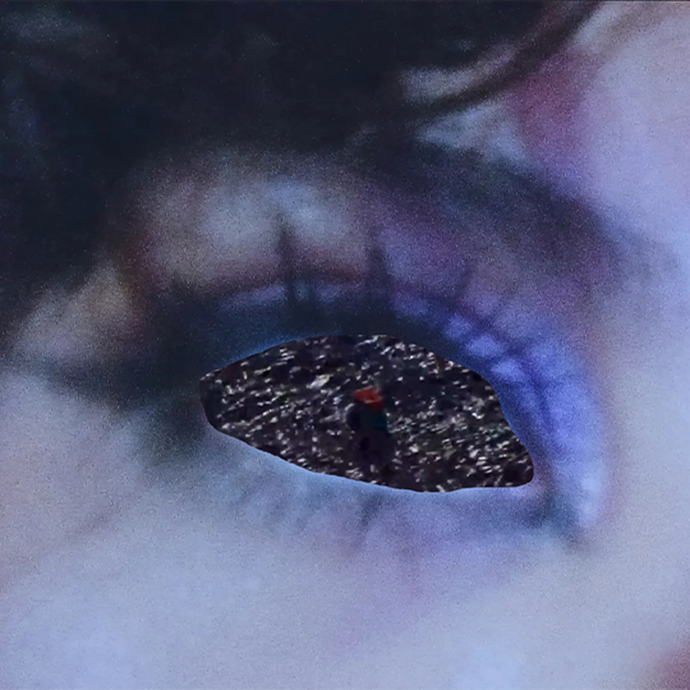
Acting as a self-proclaimed “Watcher”, Corey Penn-Thomas uses media taken from online sources to create playfully unsettling scenes, using the footage and images found to explore the power dynamic between observed and observer. Their work is theory driven by the idea of Panopticism, where the state of constant surveillance within modern infrastructure is intended to inflict internal self-discipline and compliance. Faceless Gaze acts to demonstrate some of the many ways your likeness can be used, manipulated, or played with.
Remains
Natasha Roberts uses found archives to explore how photographs shift once removed from their original context. By displaying slides directly on gallery walls, she transforms private images into public objects. Arranged loosely, they feel unsettled and open to reinterpretation. Detached from their origins, the photographs lose certainty and become shaped by space and unfamiliar viewers. The work reflects on memory, ownership, and time, presenting the archive as something fluid, questioning what remains when memory is no longer held by those who lived it.

Harvey Shaw is a documentary photographer from Manchester, using stark high contrast to reveal honest moments and atmosphere. Turning toward motorsport, he explores speed, tension, and human focus within the mechanical theatre of racing. Into the Apex is a photographic project examining the motorsport industry through an immersive documentary approach. Rather than focusing only on racing, the work highlights the communities, labour, and environments that shape the sport, revealing motorsport as a subculture defined by ritual, collaboration, and shared passion.

‘Imperfections’ as beauty
Weston’s recent works are about how they see ‘imperfections’ as beauty as a woman they have grown up living in a society that believes that imperfections are flaws no matter what they are. We are told to cover scars, stretch marks, cellulite, and acne anything that isn’t perfection; their works are challenging that. They believe when they were young that they had to be like everyone else around me now that I’m older, they see the imperfections make them different yes but not Flawed.
- Instagram: @renphotography2022

Exhibition Gallery


