

Childhood, Education and Society: Additional Learning Needs (BA Hons)
BA (Hons) Childhood, Education and Society: Additional Learning Needs is a distinctive interdisciplinary degree that combines early childhood studies, education and sociology with a focused specialism in Additional Learning Needs. It offers a comprehensive understanding of how children and young people develop and learn, while placing inclusion and equitable practice at the heart of the curriculum.
You will explore how social, cultural and political contexts shape educational experiences and outcomes, with particular attention to the rights, identities and voices of learners with additional needs. Drawing on current legislation, research and professional frameworks, the programme develops your knowledge of inclusive pedagogy, partnership working and leadership in diverse settings.
From your first year, you will build a strong foundation in human development, wellbeing, safeguarding and professional identity. As you progress, you will deepen your expertise in areas such as specific learning differences, neurodivergence and collaborative approaches to supporting learners with ALN. You will examine how educators, families and multi agency teams can work together to remove barriers to participation and achievement.
The course also develops your understanding of research methods, enabling you to engage critically with evidence and apply it to practice. In your final year, you will undertake an extended independent research project with a strong ALN focus, demonstrating your ability to investigate complex issues and contribute to inclusive practice.
Learning is enhanced through specialist resources and innovative technologies, including immersive virtual reality facilities that support experiential and reflective learning. You will have opportunities to undertake a relevant placement to strengthen your practical experience and professional networks, and you may also choose to study abroad for a semester.
Graduates are well placed for roles in schools, early years settings, specialist provision, local authorities and community services. The degree also provides a strong pathway into postgraduate study, including teacher training, ALN coordination, social work and research focused on inclusion and equity.
Course details
- English
- Welsh
- Bilingual
Why choose this course?
What you will learn
You will develop an in depth understanding of human development, inclusive practice and the legislative and ethical frameworks that underpin Additional Learning Needs provision. The course equips you to recognise and respond to diverse learning profiles, including specific learning differences and neurodivergence.
You will explore partnership working with families and professionals, leadership in inclusive settings and the role of learning environments and digital technologies in supporting access and engagement. Through research training, you will learn to evaluate evidence and apply it critically to practice.
Placement experience and your final year research project will enable you to specialise further in ALN, strengthening your confidence, advocacy skills and professional identity within inclusive education.
In the first year, you will explore the foundations of human development and wellbeing, children’s rights, and inclusive learning strategies. You will also develop key academic and professional skills, engage with creative pedagogies, and understand safeguarding principles and additional learning needs. These modules prepare you for reflective, inclusive, and ethical practice in early years and educational settings.
(20 credits)
(20 credits)
(20 credits)
(20 credits)
(20 credits)
(20 credits)
In your second year, you will deepen your understanding of inclusive education through focussed ALN/SEN modules, leadership, and the role of environments and technologies in learning. You will explore research methods, social justice, and collaborative practices, preparing you to lead and innovate in diverse educational settings.
(20 credits)
(20 credits)
(20 credits)
(20 credits)
(20 credits)
(20 credits)
In your final year, you have the opportunity to specialise further in Additional Learning Needs/Special Educational Needs (ALN/SEN). You will critically engage with contemporary issues in education, explore leadership in inclusive settings, and deepen your understanding of multilingualism, and neurodivergence. You will also undertake an independent research project, preparing you for professional practice and advocacy in diverse educational contexts.
(20 credits)
(20 credits)
(20 credits)
(20 credits)
Disclaimer
-
The modules outlined above provide examples of what you can expect to learn on this course based on recent academic teaching. We continuously review our courses to ensure quality enhancement and to manage our resources. The precise modules available to you in future years may vary depending on staff availability and research interests, new topics of study, timetabling and student demand. Where your course includes optional modules, these are to provide an element of choice within the course. The availability of optional modules may vary from year to year and will be subject to minimum student numbers being achieved. This means the availability of specific optional modules cannot be guaranteed.
You’ll typically complete 120 credits per year of study on a full-time course. For more information visit our Student Agreement.
Ratings and Rankings

Visit Us At An Open Day
Get to know us, the place you will call home while studying with us and the experts who lead our courses. Meet current students and hear what they love about studying with us.
Staff
Our People
You will be taught and supported by a wide range of professional staff and teams here to help you get the university experience you are looking for. Our teaching staff were ranked 2nd in Wales for Teaching, Assessment and Feedback and Academic Support (NSS 2024) meaning that the support and feedback you get will help you learn and develop strong academic skills. Our students have placed us 1st in Wales for Learning Opportunities and Student Voice (NSS 2024) meaning that there are a wide range of opportunities available to enhance your studies and that students play an active role in shaping their learning experiences. Our commitment to your learning has seen our students place us as 1st in Wales and joint 3rd in the UK for student satisfaction (Times Higher Education, 2024, ‘Overall Positivity’ measure). Find out more about our academic staff who teach across our courses.
Facilities
The University of Wales Trinity Saint David (UWTSD) offers a range of on-campus facilities as well as for Youth Work and Early Years Studies. Students benefit from immersive learning environments, including storytelling rooms and sustainability-focused gardens.
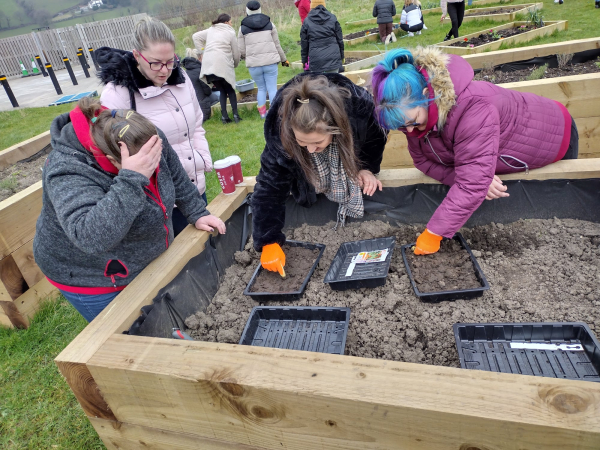
Explore the journeys of our Youth Work and Early Years Studies students, who are dedicated to supporting children’s development and fostering positive environments for young people. Our programmes equip them with the skills to make a lasting impact in their communities.


Discover Swansea Campus
Explore the impressive facilities at our Swansea campuses, offering a dynamic student experience. The campuses feature advanced laboratories, specialised art and design workshops, and innovative teaching areas. Comprehensive libraries are stocked with extensive digital and physical collections. Students benefit from dedicated areas for art, engineering, construction, and Psychology labs. Immersive rooms, available for all subjects including Policing, provide unique learning experiences. Additionally, vibrant social spaces, cafes, and an active Students’ Union hub foster a lively community atmosphere for both academic and personal development.


Further information
-
Under 21 - 96-112 UCAS tariff points
Over 21 - Early Years encourages and values applications from students who are returning to education, as they will have experiences and life skills that could support their entry onto the degree.
Applicants may be required to provide a satisfactory enhanced disclosure document from the Disclosure and Barring Service (DBS).
- We may make you a lower offer based on a range of factors, such as your background, experiences and individual circumstances. This is known as ‘Contextual Admissions’.
If your qualification doesn’t have a UCAS tariff equivalence, you don’t have traditional entry qualifications or you have accredited prior learning, please contact our enquiries team as we base decisions on our own assessment of qualifications, knowledge and previous work experience.
-
All our programmes are assessed by 100% course work. There are no exams.
We have found that using a varied range of assessment methods increases employability skills.
Employers seek graduates who are problem-solvers and who have a range of transferable skills. Assessments give opportunities to develop skills such as the ability to work in a team, have effective oral and written communication while using a range of information sharing methods, including briefing papers, academic posters, group debates and professional discussions.
There are also opportunities for practical work experiences, supporting employability, professional development and careers.
-
Study through the medium of Welsh or Bilingually
UWTSD prides itself on being a bilingual University and some modules in this course are available to study through the medium of Welsh either fully or partially. In all cases students will be able to submit written assessments through the medium of Welsh.
If you choose to study your course either fully or partially through the medium of Welsh, you may be eligible to apply for scholarships and bursaries to support you with your studies.
The availability of Welsh medium modules is reviewed regularly and may vary each year depending on staffing, research interests, timetabling, student demand, and minimum enrolment numbers, so specific modules cannot always be guaranteed, get in touch to discuss more.
Welsh Opportunities
As a leading Welsh university, we are proud to offer dedicated support services and halls of residence for Welsh-speaking students, encouraging the sense of community and the feeling of a home away from home, including joining clubs and societies for Welsh speakers and becoming a member of our vibrant Coleg Cymraeg Cenedlaethol branch.
Opportunities to Learn Welsh
We also provide a variety of opportunities to learn and develop your Welsh language skills.
-
You may be eligible for funding to help support your study. To find out about scholarships, bursaries and other funding opportunities that are available please visit our Scholarships and Bursaries section.
-
The course prepares graduates for careers in education, social care, policy, and community development, or for further study in teaching, social work, or postgraduate research.
Students will have the opportunity to undertake a relevant placement of their choosing.
Students will have the option of undertaking a semester abroad through international mobility.